Dropshipping and suppliers
How can I synchronize product data and orders between store and suppliers?
What is Dropshipping?
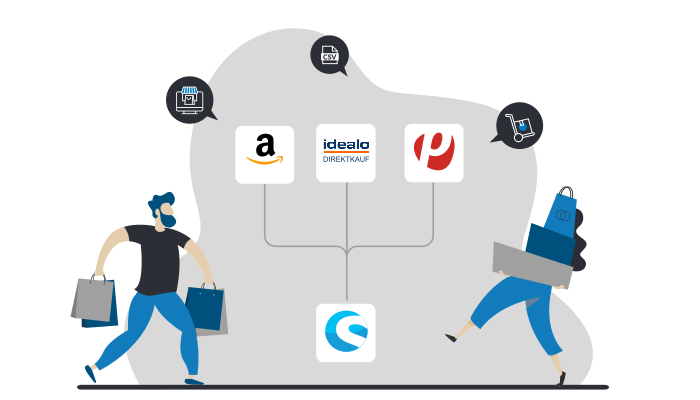
Dropshipping is a trend in which online retailers no longer maintain their own warehouse, but this is taken over by a dropshipping supplier. The data exchange between retailer and supplier takes place via an interface.
Simplified, it works like this: The supplier informs the online merchant which goods are still available (stock, availability, purchase price, discount, notified delivery time). The online merchant transmits incoming orders to the supplier and the supplier takes care of shipping the goods. The supplier connection is then often realized via CSV or XML files and a server for data exchange such as FTP or SFTP.
Synchronize data
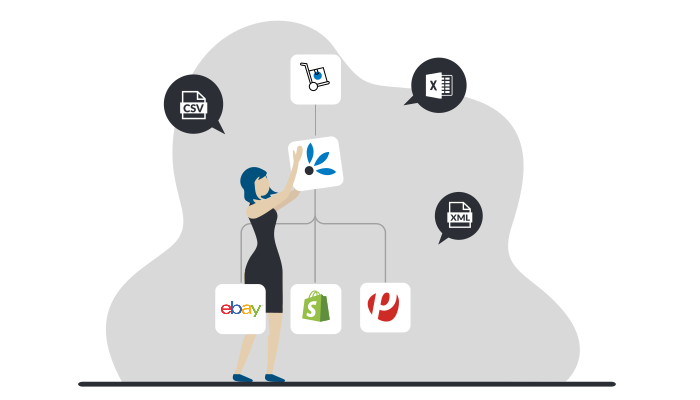
The data exchange between store and supplier can be completely automated via Synesty Studio. The suppliers deliver the product data as CSV or XML data feed via URL, (S)FTP or API (e.g. REST-API) and expect the orders back as a file in a certain format (e.g. CSV, Excel, XML or special formats like openTRANS XML).
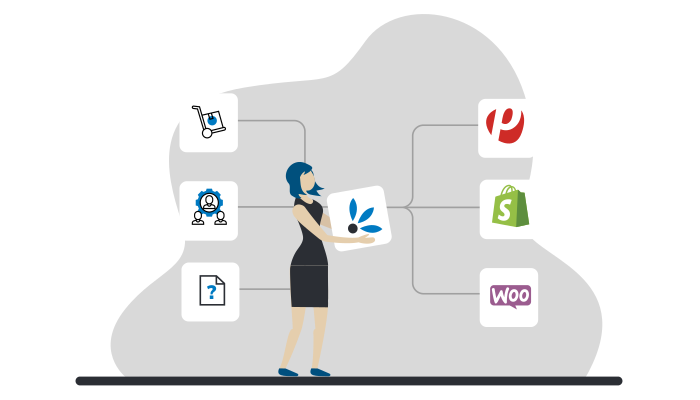
Synesty Studio offers extensive interfaces and connections to systems like online stores, enterprise resource planning or marketplaces to realize supplier connections. Like e.g.
- plentymarkets
- Shopify
- Shopware
- woocommerce- Connection of any system via the [API-Connector Tools][api-connector tools](/en/addon/API-Connector-Tools/) (e.g. for all API, CSV or XML integrations)
Example video - supplier connection using Shopify as an example
In this tutorial we will show you how to establish a successful supplier management for your online store with Synesty. It will be shown how to fetch a supplier file and how to read it in, how to recalculate the prices of the single articles of your supplier file, how to define a rule to filter out articles that have no stock and how to prepare the articles as your target system needs it.
 Das Video wird bei Klick von Youtube geladen und abgespielt. Dabei stellt Ihr Browser eine Verbindung zu den Youtube-Servern her. Es gelten die Datenschutzhinweise von Google / Youtube
Our whitepaper for Makers: No Code Integration & Automation
Related articles

Last updated January 28, 2019
Chat with us